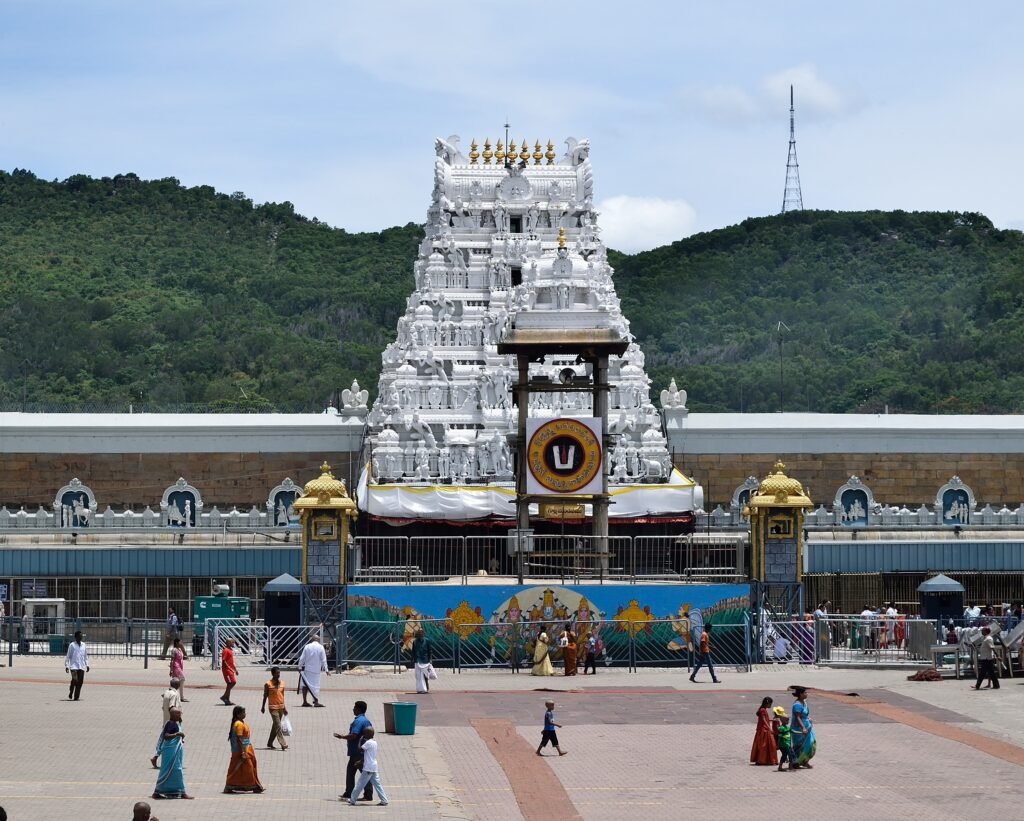
Tirumala Venkateswara Temple – Tirupati, Andhra Pradesh
The world’s most visited Hindu temple and the divine abode of Lord Venkateswara.
Quick Visitor Guide (Darshan, Booking, Timings, Accommodation)
Online Darshan Booking (Very Important)
Darshan at Tirumala is mostly accessed through the official TTD portal.
Book here:
Official Website: https://tirupatibalaji.ap.gov.in
Services available online include:
- ₹300 Special Entry Darshan
- Free Darshan (limited quota, often opened monthly)
- Accommodation booking (Cottages, Guest Houses)
- Laddu Prasadam purchase
- Arjita Sevas (Suprabhatham, Thomala, Archana, Kalyanotsavam, etc.)
- Special tickets for senior citizens, divyang (disabled), and parents with infants
Bookings open month-wise and get sold out quickly.
Darshan Timings
The temple is open almost all day except for brief intervals for rituals.
Typical timings:
- Opens: Around 2:30 AM (for Suprabhatham)
- Closes: 11:00 PM – midnight (varies daily)
Free Darshan queue may take 8–12 hours on crowded days.
₹300 Darshan typically takes 1–3 hours, depending on season.
How to Reach Tirumala
- Nearest Airport: Tirupati International Airport (40 km to Tirumala)
- Nearest Railway Station: Tirupati Railway Station (24 km)
- Bus Services: Regular APSRTC buses from Tirupati to Tirumala
- Road: Pilgrims may take the Alipiri or Srivari Mettu walking paths
Accommodation on the Hills
Bookable through the TTD website:
- Varaha Swamy Guest House
- Madhavam Guest House
- Srinivasam Complex (downhill at Tirupati)
- PAC (Pilgrim Amenities Complex)
- TTD Cottages (multiple ranges)
Budget, mid-range, dormitory, and free rest areas are available.
Local Transport
Electric autos, TTD buses, and free circulator buses are available around the temple.
Overview
Tirumala Venkateswara Temple, located on the sacred Tirumala hills of Andhra Pradesh, is one of the most revered and wealthiest temples in India. Dedicated to Lord Venkateswara, the incarnation of Vishnu who descended to earth to save mankind from the hardships of Kali Yuga, the temple attracts nearly 50 million pilgrims every year.
It is considered the spiritual heart of Vaishnavism, a Divya Desam, and a central pilgrimage in South Indian temple tradition.
The temple stands atop the Seshachalam Hills, believed to be the manifestation of Adishesha, the serpent on whom Lord Vishnu rests.
Origin, Legends, and Spiritual Significance
Divine Origin (Venkatachala Mahatmya)
Ancient scriptures describe that during Kali Yuga, when dharma declined and suffering increased, Lord Vishnu incarnated as Lord Srinivasa and resided on the Venkatachala hill.
The core legends include:
Vishnu’s Descent
Vishnu came to earth to protect devotees struggling in the age of conflict.
He meditated in an anthill on the hills of Tirumala, where a cow secretly fed Him milk daily. The Chola king who ruled the region discovered this and later built the earliest shrine.
Marriage With Padmavati
The Lord married Padmavati Devi, daughter of Akasha Raja, after a divine romance.
The temple celebrates this divine wedding annually during the Brahmotsavam and Kalyanotsavam seva.
Loan from Kubera
To meet the wedding expenses, Lord Srinivasa borrowed money from Kubera, promising to repay it with the offerings made by devotees.
Pilgrims believe this is why offerings at Tirupati are so abundant.
Purpose in Kali Yuga
Worshipping Venkateswara is believed to:
- Remove obstacles
- Bring prosperity
- Protect devotees from the hardships of the times
Historical Development
Tirumala’s temple history spans over 2000 years.
Early Period
- Mentioned in ancient Tamil scriptures (Alvars’ Divya Prabandham)
- Pallavas (9th century) and Cholas (10th–11th century) contributed to temple development
- Significant early stone construction attributed to medieval Tamil rulers
Vijayanagara Empire
The most important historical phase:
- Kings like Krishnadevaraya donated vast wealth
- Major gopurams and mandapams built
- Gold plating of sanctum and dhwajasthambam
- Systematic administration of temple rituals formalized
Inscriptions from this period detail donations of diamonds, land, and gold.
Modern TTD Administration
In 1933, Tirumala Tirupati Devasthanams (TTD) was formed, which today manages:
- Temple rituals
- Pilgrim services
- Laddu prasadam production
- Hospitals, schools, choultries
- Accommodation complexes
TTD is considered the world’s most efficiently run temple trust.
Architecture and Temple Complex
Temple Style
Tirumala follows Dravidian temple architecture, with imposing gopurams, granite corridors, and a gold-plated sanctum.
Main Features
- Ananda Nilayam (golden temple tower)
- Garbhagriha (Sanctum) housing the self-manifested deity
- Bangaru Vakili (Golden gate)
- Dwajasthambham (flagstaff)
- Varaha Swamy Temple nearby
- Pushkarini (sacred tank) used for temple rituals
The Deity
The idol of Lord Venkateswara is among the most powerful and enigmatic in Indian temple lore:
- Height around 8 feet
- Self-manifested (Swayambhu)
- Adorned daily with diamonds, gold, and silk
- Sacred Namam applied using camphor and herbal compounds
- The deity radiates immense divinity and draws millions in devotion
The sanctum is perpetually lit with oil lamps, enhancing spiritual presence.
Daily Rituals and Sevas
Major Daily Rituals
- Suprabhatham (waking the Lord at 2:30 AM)
- Thomala Seva
- Archana
- Ekantha Seva (night ritual)
Popular Sevas Bookable Online
- Suprabhatham Seva
- Thomala Seva
- Archana
- Kalyanotsavam
- Unjal Seva
- Vishesha Pooja (Mondays)
Most sevas have limited tickets and must be booked well in advance.
Major Festivals
Brahmotsavam
The biggest annual festival, attracting lakhs of devotees. Features:
- Dwajarohanam (flag hoisting)
- Daily vahanam processions
- Rathotsavam (chariot festival)
- Chakrasnanam (holy bath ceremony)
Vaikunta Ekadashi
Extremely crowded; devotees pass through the Vaikunta Dwaram, believed to grant liberation.
Other Festivals
- Teppotsavam (float festival)
- Adhyayanotsavam
- Pavitrotsavam
- Vasanthotsavam
How to Reach Tirumala
Air
Tirupati Airport → direct flights from major cities.
Rail
Tirupati Railway Station is well connected; frequent buses go uphill.
By Road
APSRTC and private buses run continuously from Chennai, Bangalore & Hyderabad.
On Foot
Two sacred walking paths:
- Alipiri Mettu (3550 steps; 8–12 km)
- Srivari Mettu (shorter; opens during specific hours)
Walking devotees get free laddu tokens.
Accommodation
TTD Guest Houses
- Varaha Swamy Guest House
- Padmavathi & Narayanadri complexes
- Srinivasam (in Tirupati)
- Madhavam (in Tirumala)
Private Hotels (Downhill in Tirupati)
All categories available, from budget to 5-star.
Food Options
TTD runs free meal halls (Annaprasadam) serving lakhs daily.
Many vegetarian restaurants operate in Tirupati town.
Visitor Tips
- Always book darshan tickets BEFORE arriving
- Weekends and festivals are extremely crowded
- Carry water and snacks if taking Free Darshan queues
- Dress modestly (traditional preferred)
- Photography strictly prohibited inside temple
- Keep valuables safe due to crowd intensity
FAQ
Why is Tirupati so wealthy?
Due to millions of devotees offering donations; it is considered the richest Hindu temple trust.
Can non-Hindus visit Tirumala?
Admission is allowed but requires signing a declaration of faith.
Where to buy Tirupati Laddu?
Laddus can be purchased through TTD counters using digital tokens or online booking.
Is hair tonsuring available?
Yes, at Kalyanakatta, where devotees offer hair as sacred submission.