🕉️ Mithila Shakti Peeth
The Sacred Seat of the Left Shoulder | Janakpur Dham
Left Shoulder
Janakpur, Nepal
Uma / Mahodar
The Mithila Shakti Peeth is one of the 51 sacred sites where the body parts of Goddess Sati fell. Located in the ancient kingdom of Mithila, now Janakpur, it is a site of immense historical and religious importance. While the entire region of Janakpur is considered holy as the birthplace of Goddess Sita, the specific Shakti Peeth is revered for the presence of Goddess Uma.
📜 Mythology and Identity
According to the Puranas, when Lord Vishnu used his Sudarshana Chakra to calm the grieving Lord Shiva, Sati’s Left Shoulder fell here. In Mithila, the Goddess is worshipped as Uma or Maha-devi, and the protecting Bhairava is Mahodar.
🏛️ Architectural Grandeur
While many identify the Shakti Peeth with the Sona Mai Temple or the Janaki Mandir complex, the spiritual energy permeates the city. The Janaki Mandir itself is a masterpiece:
- ✨ Mughal-Rajput Style: Often called the ‘Nau Lakha Mandir,’ it features domes, pillars, and arches that blend Hindu and Islamic architectural styles.
- ✨ Bright Colors: The temple is painted in vibrant white and multi-colored stones, representing the joyous nature of the Mithila region.
- ✨ Vivaha Mandap: A dedicated area within the complex that commemorates the divine wedding.
📍 Location on Google Maps
🚗 Travel & Connectivity
🎨 The Cultural Soul: Madhubani Art
Madhubani art (also known as Mithila art) is a style of painting practiced in the Mithila region of India and Nepal. It is named after the Madhubani district of Bihar, India, where it originated. Jitwarpur, Ranti, and Rasidpur are the three most notable cities associated with the evolution of this tradition.
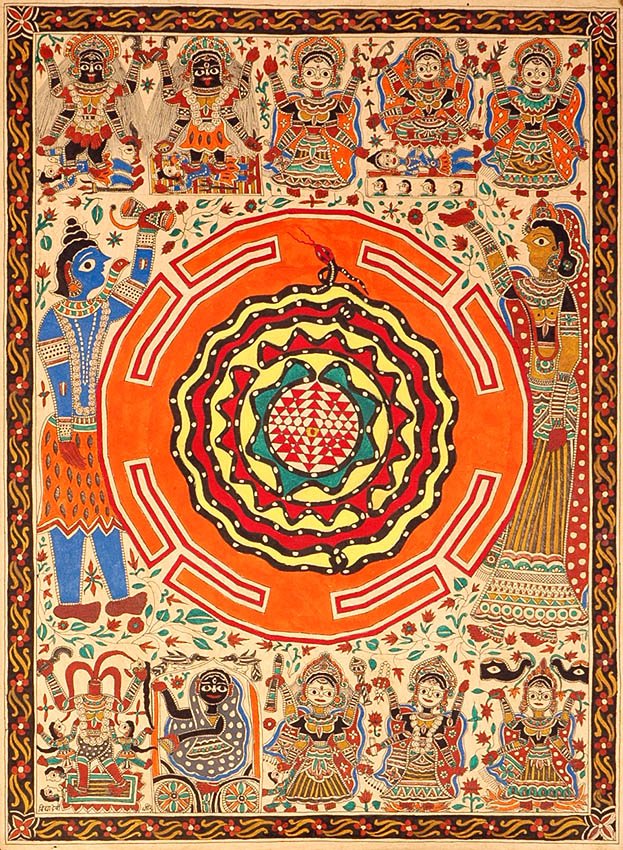
Traditionally practiced by female members, artists create these paintings using fingers, twigs, brushes, nib-pens, and matchsticks. The paint uses natural dyes and pigments like ochre (reddish brown) and lampblack (black). The art is characterized by eye-catching geometrical patterns and ritual content for occasions like birth, marriage, and festivals like Holi, Surya Shasti, and Durga Puja.
The Five Distinctive Styles:
Katchni
Tantrik
Godna
Kohbar

Artists like Asha Jha keeping the tradition alive
In the 1960s, Bharni and Tantrik styles were predominantly created by Brahmin women focusing on religious themes. Today, Madhubani art has evolved into a global form, transcending caste distinctions. The Kohbar style (or Puren) is traditionally painted on the walls of wedding chambers, depicting circular motifs and feminized faces to bless the new couple.
📅 Best Time to Visit
Vivaha Panchami: The grandest celebration (Nov/Dec) reenacting the wedding of Rama and Sita.
Chhath Puja: A major festival observed at local Pokharis (ponds).
💡 Local Experience
- Explore the 52 sacred ponds (Sagar) of Janakpur.
- Purchase authentic Mithila paintings locally in these regions.
- Try the famous local Lassi and Mithila sweets.