Kailasa Temple, Ellora
Cave 16: The World’s Largest Monolithic Masterpiece
Construction
Top-Down Carving
Top-Down Carving
Era
8th Century (Rashtrakuta)
8th Century (Rashtrakuta)
Status
UNESCO World Heritage
UNESCO World Heritage
The Impossible Architecture
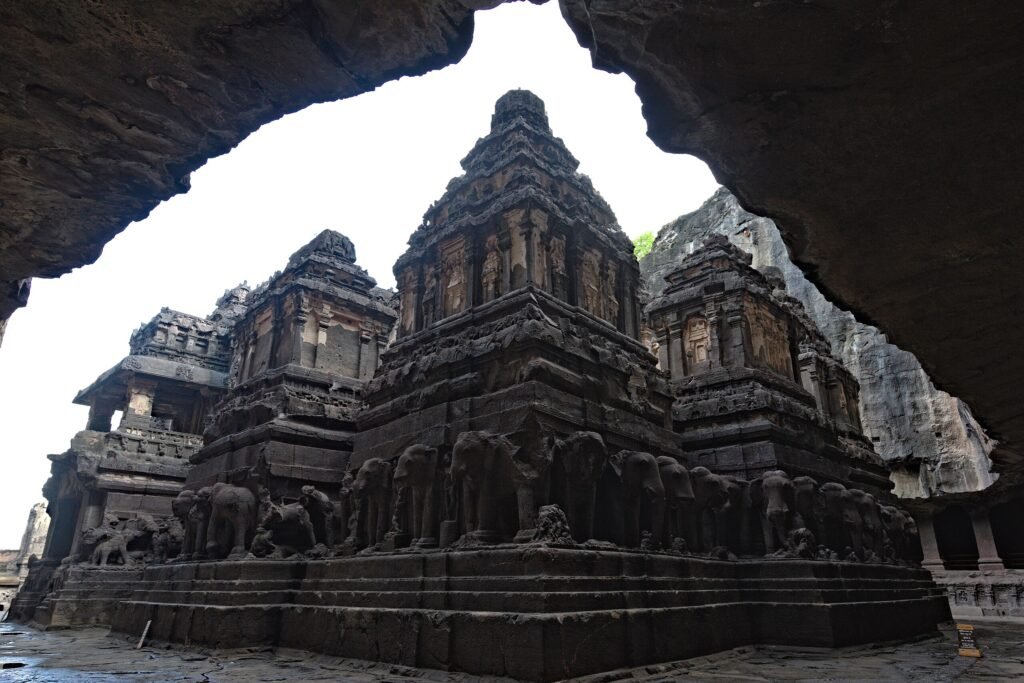
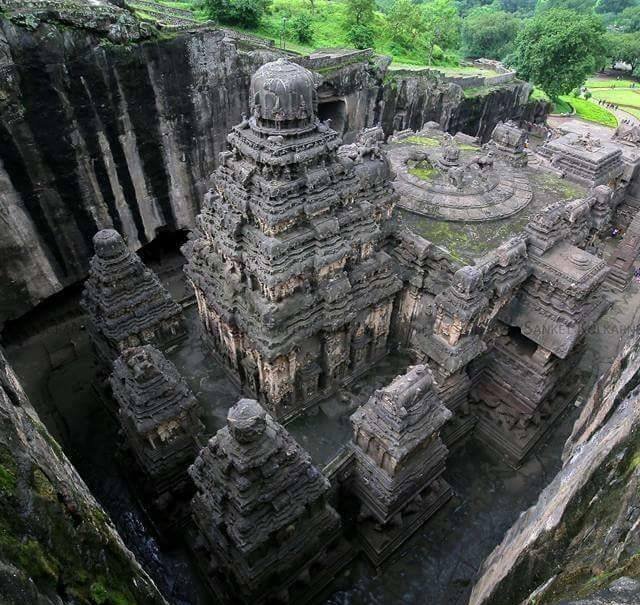
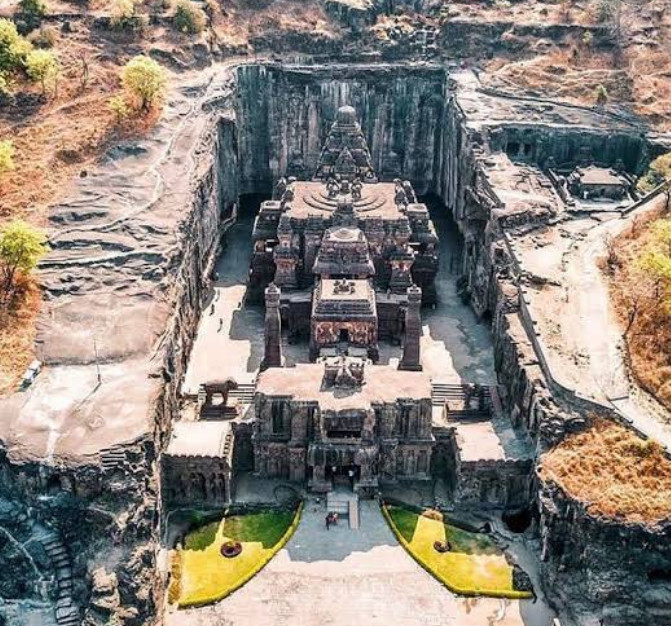
Commissioned by King Krishna I, the temple was designed to resemble **Mount Kailash**, the abode of Lord Shiva. Architects started at the summit of the cliff and carved vertically downwards. This meant that any single mistake by a sculptor would have been permanent—there was no way to replace a “broken” stone because the entire temple is one piece of the Earth.
| Feature | Technical Detail |
|---|---|
| Dimensions | 98 ft high, 145 ft wide, and 195 ft long. |
| Sculptures | Life-sized elephants and panels of Ramayana/Mahabharata. |
| Engineering | Complex drainage system and overhead bridges carved in-situ. |
| Resilience | Survived an attempt by Aurangzeb to destroy it (1682). |
Key Highlights
-
◈
Ravana Shaking Kailash: A masterpiece sculpture depicting Ravana attempting to lift the mountain while Shiva remains unmoved. -
◈
The Elephant Courtyard: Enormous elephants and 15-meter-high victory pillars (*Dhwajasthambas*) carved from the same parent rock.
Location: Sambhajinagar (Aurangabad), Maharashtra
Visitor Info (2026)
- ✈️ Fly to: Aurangabad Airport (IXU).
- 🚆 Train: Aurangabad Railway Station.
- ⏰ Timings: 6:00 AM – 6:00 PM (Closed on Tuesdays).
Travel Tip
Photography: To get the famous “aerial” view of the whole temple, climb the hill path located to the left of the entrance. It provides the best perspective of the top-down carving technique.