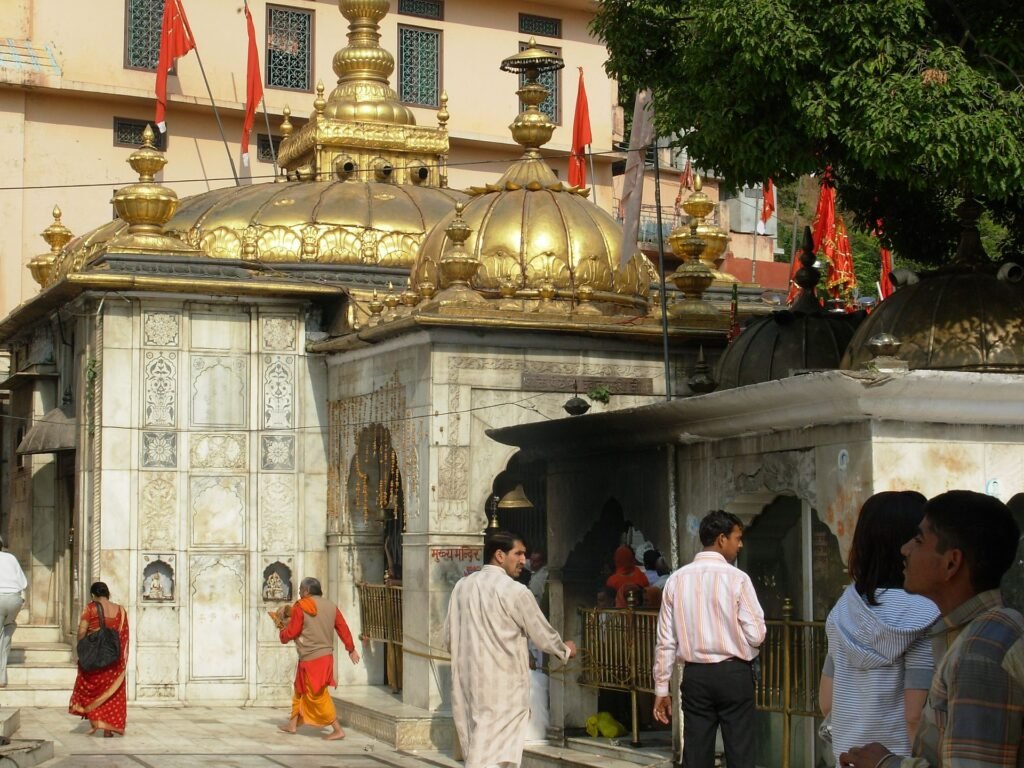
Jwalamukhi Devi Temple
The Flaming Goddess: Where Divinity Manifests as Light
Maha Shakti Peetha
Kangra, Himachal Pradesh
Eternal Flame (Agni)
The Legend of the Sacred Tongue
Jwalamukhi is one of the most venerated of the 51 Shakti Peethas. According to the Puranas, when Lord Vishnu used his Sudarshana Chakra to dismember the charred body of Sati to calm Lord Shiva, her tongue fell at this very spot in the Kangra Valley. Unlike other temples, there is no physical idol here; the Goddess is worshipped in the form of nine eternal natural flames that emerge from the crevices of the rock.
Emperor Akbar and the Golden Parasol
The temple’s history features a famous encounter with the Mughal Emperor Akbar. Skeptical of the eternal flames, Akbar attempted to extinguish them by redirecting a stream of water toward the vents. When the flames continued to burn brightly even through the water, Akbar realized the divine power of the Goddess.
In a gesture of repentance and devotion, he offered a Chattra (Golden Parasol) to the temple. However, legend says that the Goddess refused the ego-driven gift; the gold instantly turned into an unknown metal, which scientists have reportedly been unable to identify to this day. This parasol is still displayed in the temple complex.
Architecture: The Gilded Shrine
The temple structure is a unique fusion of Indo-Sikh architectural styles. Set against the backdrop of the Shivalik range, the temple is built over a series of natural caves.
-
🔥
The Golden Dome: The main temple features a magnificent gilded dome and a tall spire, gifted by Maharaja Ranjit Singh in 1815, which adds to its royal and spiritual aura. -
🔥
Silver Doors: The entrance to the inner sanctum is marked by beautifully embossed silver doors that were also donated by the Sikh royalty. -
🔥
Gorakh Dibbi: A mystical spot within the complex where water appears to be boiling in a small tank, yet remains cold to the touch.
Find on Google Maps
Rituals & Aarti
- 🌅 Mangal Aarti: 5:00 AM (A beautiful experience of the flames in pre-dawn light)
- 🌕 Bhog Aarti: 12:00 PM
- 🌙 Shaiyan Aarti: 9:00 PM
Travel Guide
By Rail: Pathankot (123 km) or the narrow-gauge station at Jwalaji.
By Air: Gaggal Airport, Dharamshala (50 km).
Pro Tip: Navratri is the peak season when the temple is decorated with thousands of flowers.