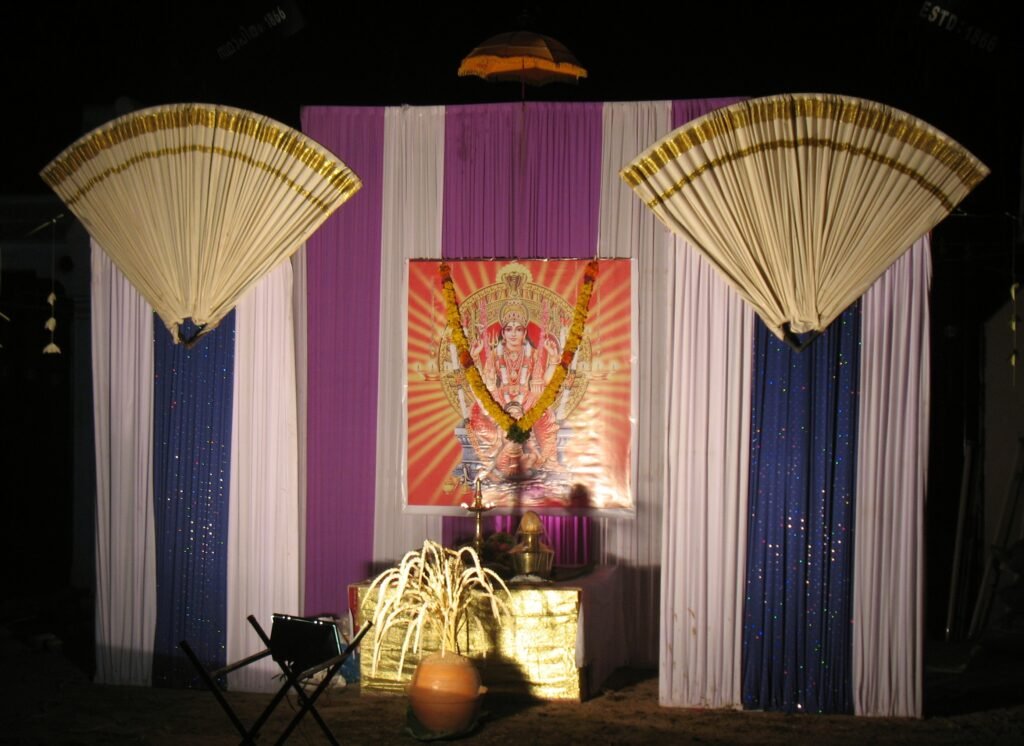
🔥 Attukal Bhagavathy Temple: The Sabarimala of Women
The **Attukal Bhagavathy Temple** is a highly revered shrine in Thiruvananthapuram, Kerala, dedicated to the supreme Mother Goddess, **Attukal Bhagavathy** (a fierce and compassionate form of Goddess Bhadrakali/Parvati). The temple is globally famous for its annual **Attukal Pongala** festival, an all-female ritualistic gathering that has repeatedly earned a place in the **Guinness Book of World Records** for being the largest annual congregation of women.
| Key Fact | Detail |
|---|---|
| Presiding Deity | Attukal Bhagavathy (Goddess Bhadrakali) |
| Location | Thiruvananthapuram, Kerala |
| Primary Significance | Known as the **”Sabarimala of Women”**. |
| Most Famous Event | **Attukal Pongala** (Largest annual gathering of women). |
| Associated Legend | Kannaki (The heroine of the Tamil epic *Silappatikaram*). |
| Architectural Style | Kerala and Tamil (A fusion of the two Dravidian styles) |
📜 History, Myth, and the Kannaki Connection
The Legend of Kannaki (The Divine Mother)
The temple’s origin is tied to the myth of **Kannaki**, the heroine of the Tamil epic *Silappatikaram*. After Kannaki destroyed the city of Madurai in her rage to avenge her husband’s death, she walked towards Kerala. She is believed to have rested at the spot where the temple now stands on her way to attain divinity. The local populace, recognizing her as the incarnation of the Divine Mother, installed her as the Goddess. Attukal Bhagavathy is thus worshipped as the source of all power, embodying both the protective and destructive aspects of the Goddess.
Historical Construction
The current temple structure is relatively recent, although the shrine’s history is ancient. It features a blend of Kerala and Tamil architectural styles, reflecting the cultural synthesis of the region. The main shrine features the characteristic Kerala-style copper-plated roof, while the *Gopuram* (tower) is designed in the colorful, multi-tiered Tamil style, adorned with Hindu mythological figures.
🏛️ Architectural Features and Temple Layout
The temple layout is characterized by its simplicity around the inner shrine, surrounded by the massive open space required for the Pongala festival.
1. The Gopurams
The temple has two main *Gopurams* (towers). The eastern *Gopuram* depicts the story of Goddess Bhagavathy, focusing on the defeat of the demon Daruka. The western *Gopuram* features the story of the ten avatars of Lord Vishnu.
2. The Idol and Sanctum
The main idol of the Goddess is small, made of wood, and is richly decorated in gold and traditional Kerala jewelry. She is shown in a fierce, protective stance, holding a trident (*Trishul*), sword, and shield. The surrounding structure is built in the traditional circular Kerala style (*Sreekoil*).
3. Navagraha Shrine
A separate, notable shrine dedicated to the **Navagrahas** (Nine Planets) is located within the complex, attracting devotees seeking astrological remedies and blessings.
✨ Unique Spiritual Practices and the Pongala Festival
The Attukal Temple’s uniqueness lies almost entirely in the scale and execution of its main annual ritual.
🔥 Attukal Pongala (The Guinness World Record Event)
The **Pongala** festival is a 10-day event that culminates on the ninth day with the main ritual. Millions of women gather in the streets, parks, and around the temple complex, stretching for miles across Thiruvananthapuram city. They cook a sweet offering (*Pongala*—a mix of rice, jaggery, coconut, and ghee) in earthen pots over open, makeshift fires. The massive synchronized cooking, performed exclusively by women, is an act of fierce devotion to the Mother Goddess and is done to seek her blessings for the prosperity and well-being of the family. The offering is completed when the chief priest offers a blessing and sprinkles holy water on the cooked *Pongala* from the temple sanctum.
- **Kattyakula Pattu:** A ceremonial song recounting the tale of Kannaki, which is sung daily for the duration of the 10-day festival.
- **Kuthiyottam:** A unique ritual performed by boys under the age of 13, symbolizing the wounded soldiers of the Goddess after her battle with the demon.
📅 Major Festivals
The entire temple calendar revolves around the annual Pongala event:
- **Attukal Pongala:** (February/March, usually on the Malayalam month of Kumbham) The primary 10-day festival culminating in the massive cooking ritual, drawing global media attention.
- **Mandala Vratham:** (November/December) The 41-day fasting period observed, similar to the start of the Sabarimala pilgrimage season.
🚗 Travel & Logistics Connections
| Mode of Transport | Details |
|---|---|
| By Air | **Thiruvananthapuram International Airport (TRV)** (approx. 7 km) is the nearest airport. Taxis and local buses are readily available. |
| By Rail | **Thiruvananthapuram Central Railway Station (TVC)** is the major railhead (approx. 2.5 km), with excellent connectivity across India. |
| By Road | The temple is located close to the city center and major roads. State Transport buses and private vehicles easily connect the city to the temple. During Pongala, access is heavily restricted, and special bus services operate. |
| Local Travel | Auto-rickshaws, city buses, and taxis are used locally. During the Pongala festival, all vehicular traffic is banned near the temple complex. |
🛌 Local Accommodation (Hotels & Stays)
Accommodation is abundant in Thiruvananthapuram city:
- **Near the Temple:** Limited budget lodges and *Dharamshalas* are available near the Attukal area.
- **City Center/Kowdiar:** Offers the full range of options, from budget to luxury (*Hyatt Regency*, *Vivanta by Taj*), which are a short drive from the temple.
- **Pongala Time:** During the festival, hotels are often booked out months in advance, and pilgrims rely heavily on community *choultries* or temporary housing.
👥 Tour Operators & Nearby Excursions
Operators focus on combining the visit with Kerala’s major spiritual and natural attractions.
- Local Tour Focus: Services include arranging family transport, temple visit logistics, and specialized assistance for performing the Pongala ritual (securing space, fire materials).
- Popular Excursions:
- **Sree Padmanabhaswamy Temple:** The famous, wealthy Vishnu temple in the city center.
- **Kovalam Beach:** A major tourist beach destination (approx. 15 km).
- **Napier Museum and Zoo:** Historical and cultural centers in the city.
- **Ponmudi Hill Station:** A nearby scenic hill retreat.
❓ Frequently Asked Questions (FAQ)
Q: Why is Attukal called the “Sabarimala of Women”?
A: It is called this because, much like the Sabarimala Ayyappa Temple where male devotees dominate, Attukal is the major pilgrimage site where the primary ritual (**Pongala**) is performed almost exclusively by women, symbolizing the central role of female devotion.
Q: What is the significance of the Pongala ritual?
A: The cooking of *Pongala* (a sweet offering) is an ancient, pagan ritual performed to appease the Mother Goddess (Bhagavathy) and seek her blessings for the welfare, health, and prosperity of the family. The sheer scale of the event makes it globally unique.
Q: Is the temple open to men?
A: Yes, men can visit the temple throughout the year for *darshan* and regular *pujas*. However, the central ritual of the Attukal Pongala festival is strictly reserved for women.
Q: Does the temple have a specific dress code?
A: Yes, like most Kerala temples, a traditional and modest dress code applies. Men should wear *dhoti* or trousers, and women must wear *saree* or *salwar kameez*. Bare chests are often required for men entering the inner sanctum.