☀️ Martand Sun Temple
The Architectural Jewel of the Karkota Dynasty
🌍 Introduction
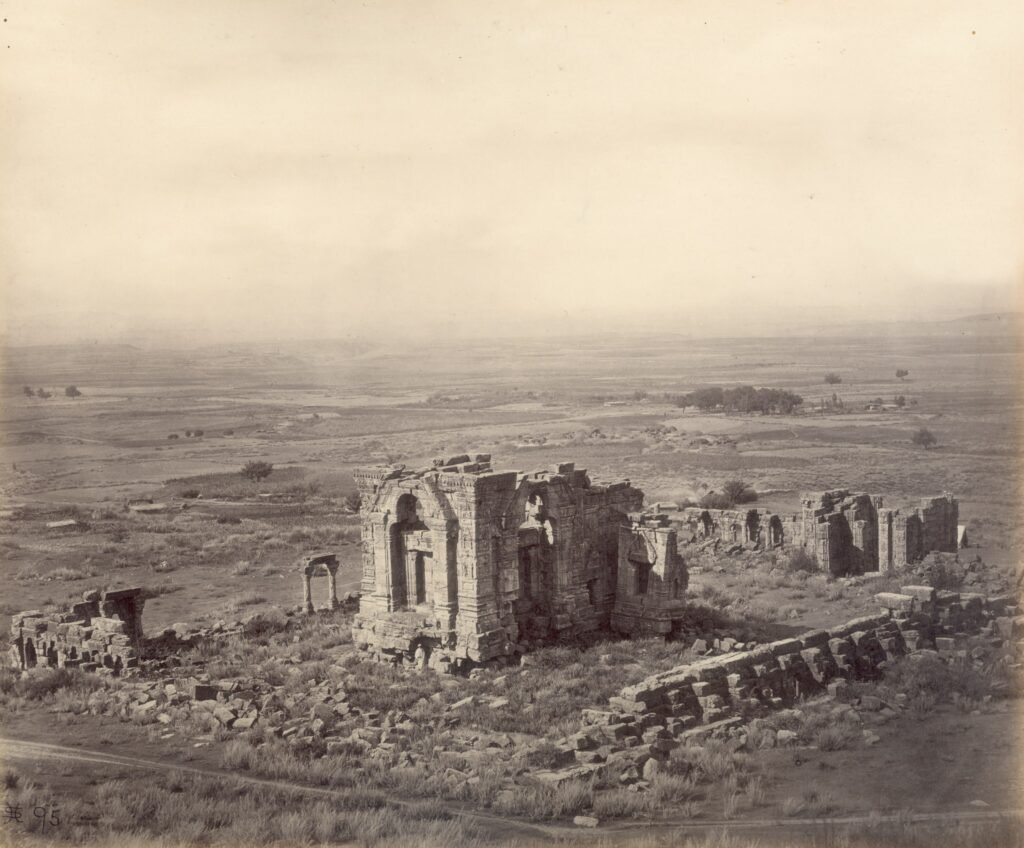
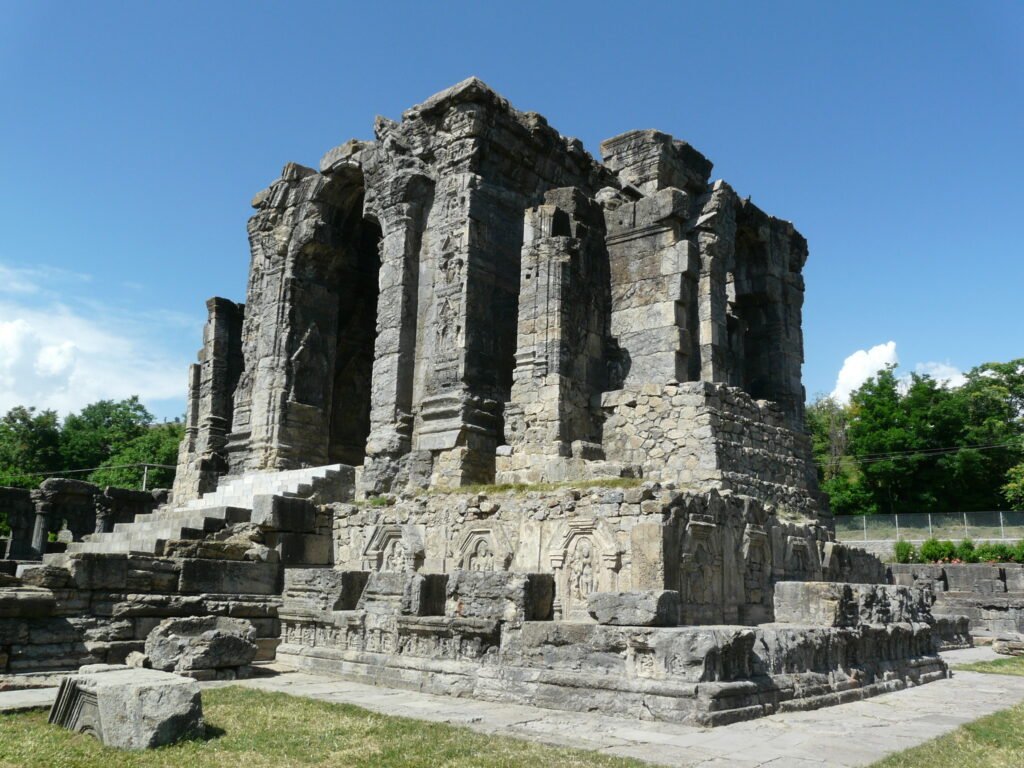
The Martand Sun Temple is a medieval Hindu temple located near the city of Anantnag in the Kashmir Valley. Constructed in the **8th Century CE**, it was the masterpiece of King **Lalitaditya Muktapida**, the most powerful ruler of the Karkota Dynasty. Though currently in ruins, the temple’s sheer scale and intricate stone carvings continue to draw historians and travelers from across the globe.
🏛️ Architectural Grandeur
The temple is a unique fusion of **Gandharan, Gupta, and Greek** architectural styles. Built atop a plateau, it provides a panoramic view of the entire Kashmir Valley.
The Central Shrine
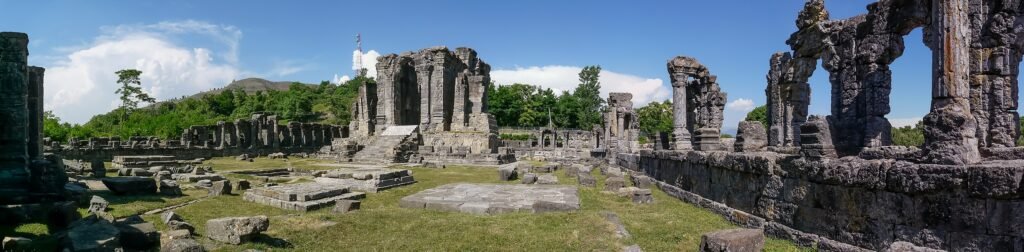
The main sanctuary stands in a vast courtyard surrounded by 84 smaller shrines, reflecting the solar cycle and the number of days in a week multiplied by the months.
Peristyle Design
The courtyard is enclosed by a colonnaded peristyle with fluted columns, heavily influenced by Greek architecture brought to the region during the time of Alexander.
📜 The Rise and Fall
King Lalitaditya designed Martand to be a symbol of his vast empire, which stretched from Central Asia to the Caspian Sea. The temple was built using massive blocks of grey limestone, fitted together without mortar—a technique that has allowed the ruins to stand for over a millennium.
📍 Location & Access
🎥 Cinematic Connection
The temple gained modern popularity after being featured in the Bollywood film Haider during the “Bismil” song sequence.
💡 Heritage Value
It is a protected monument of national importance under the Archaeological Survey of India (ASI).