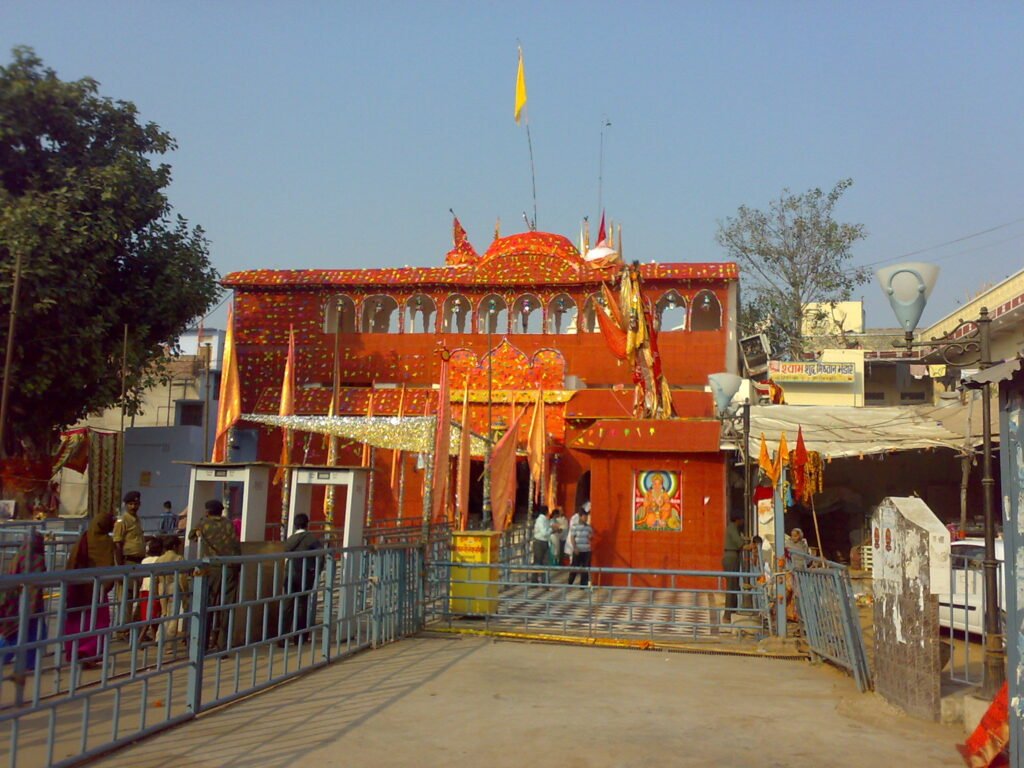
Khatu Shyam Ji Mandir
The Supreme Legend of Sheesh-Daani & The Support of the Defeated
Baba Shyam (Barbarika)
Sikar, Rajasthan
Haare Ka Sahara
1
The Legend of Barbarika: The Supreme Sacrifice
The history of Khatu Shyam Ji traces back to the Mahabharata. Barbarika was the son of Ghatotkacha and the grandson of Bhima. A warrior of unparalleled skill, he possessed Three Divine Arrows (Teen Baan) gifted by Goddess Kamakhya, capable of finishing the entire Kurukshetra war in one minute.
In return, Krishna blessed him with his own name—Shyam—and declared that in the Kaliyuga, he would be worshipped as the ultimate savior of those who have lost all hope (Haare Ka Sahara).
2
Architectural Grandeur: The Marble Marvel
Built in the 18th century by Roop Singh Chauhan, the temple is a masterpiece of Rajasthani architecture. The structure is built primarily using White Makrana Marble, creating a luminous glow under the desert sun.
- ✔
The Jagmohan: The massive prayer hall features walls adorned with mythological frescoes and intricately carved pillars that reflect the Shekhawati art style. - ✔
The Sanctum (Garbhagriha): The shutters of the inner sanctum are covered in pure silver sheets, housing the sacred idol of Shyam Baba, which is beautifully decorated daily with fresh flowers and royal attire. - ✔
Intricate Jali Work: The windows and railings showcase delicate geometric and floral stone-cutting (Jali work), allowing for natural ventilation and a play of light.
The Sacred Shyam Kund
Adjacent to the temple lies the Shyam Kund (or Shyam Sarovar). This is the exact spot where the head of Barbarika was retrieved from the earth centuries after the war.
Devotees believe the water possesses miraculous healing properties. It is a mandatory ritual for pilgrims to take a holy dip here before entering the main shrine to purify the soul and seek relief from physical ailments.
3
Festivals: Nishan Yatra & Phalguna Mela
🚩 Nishan Yatra
Devotees carry a Nishan (a triangular saffron/orange flag) while walking barefoot from Ringas to Khatu (approx. 18 km). The flag symbolizes the sacrifice of Barbarika’s head and is offered at the temple as a token of absolute surrender.
🌸 Phalguna Mela
The “Lakkhi Mela” occurs in Feb/March. For 10-12 days, the town transforms into a sea of humanity. The peak is on Ekadashi, celebrating the appearance of the idol. Millions participate in Bhajan Sandhyas and play Holi with gulal.
Aarti Timings (Winter)
- 🌅 Mangala: 5:30 AM
- ✨ Shringaar: 8:00 AM
- 🍲 Bhog: 12:30 PM
- 🌆 Sandhya: 6:30 PM
- 🌙 Sayana: 9:00 PM
How to Reach
By Train: Nearest station is Ringas Junction (17 km).
By Air: Jaipur International Airport (100 km).
By Road: Well connected via NH-11 from Jaipur and Delhi.
Planning your pilgrimage to Khatu Shyam Ji?