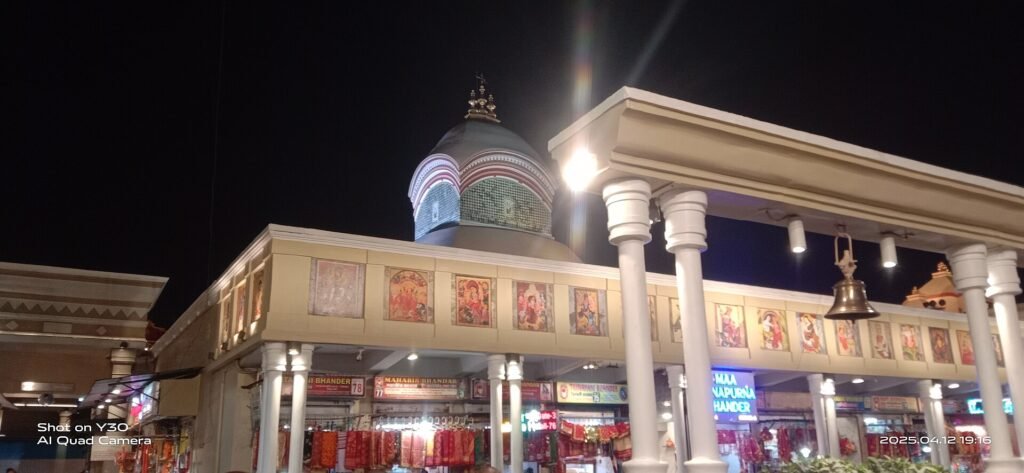
🖤 Kalighat Kali Temple
The Power of Kolkata’s Divine Mother
Goddess Kali
Toes of Sati’s Right Foot
Adi Ganga
The **Kalighat Kali Temple** is the most significant pilgrimage site in Kolkata, the capital of West Bengal, and a profound symbol of the city’s identity. Dedicated to the fierce form of the Divine Mother, **Goddess Kali**, the temple is revered as one of the 51 **Shakti Peethas**—the holy sites where the body parts of Goddess Sati (Parvati) fell. The temple is famous for its vibrant, intense atmosphere and is the epicenter of the *Shakti* cult in Eastern India.
📜 History, Myth, and the Modern City
The Shakti Peetha Legend
Kalighat is identified as the spot where the toes of Goddess Sati’s right foot (or alternatively, a part of her face or fingers) fell during Shiva’s dance of cosmic destruction (*Tandava*). The name **Kolkata** itself is widely believed to be derived from the name Kalighat, emphasizing the city’s spiritual connection to the Goddess.
The Idol of Kali
The current, striking idol of the Goddess is unique. It does not follow the traditional sculptural form. Only the three massive eyes, the four hands (holding weapons and a severed head), and the long, gold-studded tongue are prominent, made of black stone and gold. The Goddess is perpetually draped in heavy silk cloth and adorned with exquisite jewelry.
Historical Construction
The original temple was a small hut dating back to ancient times. The current structure was completed in the early 19th century by **Raja Santosh Roy Chowdhury** of the Bengal Zamindar family. The temple architecture follows the traditional Bengali temple style, known as the *Aat Chala* (eight-sloped roof) style.
🏛️ Architectural Features and Temple Layout
The Kalighat temple complex is built on a plot of land that was once on the banks of the Adi Ganga river, a historical channel of the Hooghly (Ganges).
1. Natmandir (Dancing Hall): The main structure features a large rectangular hall, the **Natmandir**, where devotees gather to observe the deity from a distance. The ceiling and walls are often decorated with contemporary paintings of the Goddess.
2. Jor Bangla: The main temple features the **Jor Bangla** style of construction, a pair of curved roofs connected together, typical of the indigenous Bengali style.
3. Shashti Tala: Adjacent to the main temple is the **Shashti Tala** or Kadamtala, a small, square shrine dedicated to the goddess Shashti (Protector of Children). The area also features the **Yajna Kunda**, the ceremonial fire pit.
4. Kundupukur: A small sacred tank or pond, **Kundupukur**, is located outside the temple walls. Legend says that the original *Swayambhu* (self-manifested) Shiva Lingam was recovered from this tank, and taking a dip in its waters is considered highly sacred.
✨ Unique Spiritual Practices and Rituals
Kalighat is famous for its intense, traditional, and often fierce rituals, emphasizing the raw power of the Goddess Kali.
- Bali Daan (Animal Sacrifice): A controversial yet ancient practice, *Bali Daan* (mostly of goats and sheep) is performed in a designated area of the temple complex as an offering to the fierce aspect of the Goddess.
- Aarti and Bhog: The daily *Aarti* (worship) is spectacular, performed multiple times a day. The **Bhog** (food offering) to the Goddess is strictly vegetarian, reflecting the temple’s daily culinary tradition.
- Touching the Feet: In a rare tradition, devotees are sometimes allowed to quickly touch the *Chandra* (ornaments/metal disk) on the deity’s massive feet (only visible when the Goddess is not draped in heavy silks) for special blessings.
Symbolism of Kali
Goddess Kali, worshipped here, is the embodiment of time, change, and destruction. Her dark skin, severed head, and tongue sticking out symbolize the victory of the Divine over ego and the fierce protective nature of the Mother.
📅 Major Festivals
- Durga Puja / Kali Puja: (September/October) The temple sees its largest crowds during the **Kali Puja** (Deepavali night) and the preceding **Durga Puja** week, with night-long worship and immense energy.
- Snana Yatra: (June) The annual bathing ritual of the deity’s idol, where the idol is taken out and ritually bathed in the Adi Ganga/Kundupukur waters.
- Paush Sankranti: (January) Marked by special ceremonies and a large gathering of devotees.
📍 Location on Google Maps
🚗 Travel & Logistics Connections
| Mode of Transport | Details |
|---|---|
| By Air | **Netaji Subhas Chandra Bose International Airport (CCU)** (approx. 25 km). The temple is about an hour’s drive from the airport. |
| By Rail | **Howrah Junction (HWH)** and **Sealdah Station (SDAH)** are the major rail terminals, with excellent connectivity across India. |
| By Metro | **Kalighat Metro Station** (on the Blue Line) is the most convenient way to reach the temple area, located a short walk (about 10 minutes) from the entrance. |
🛌 Accommodation
Near Temple: Budget hotels, guesthouses, and Dharamshalas for pilgrims.
Central Kolkata: Luxury options like Taj Bengal and The Oberoi Grand are a short taxi ride away.
👥 Nearby Excursions
- Dakshineswar Kali Temple
- Belur Math
- Victoria Memorial
- St. Paul’s Cathedral
❓ Frequently Asked Questions (FAQ)
Q: What makes Kalighat a Shakti Peetha?
A: It is believed to be the spot where the toes of Goddess Sati’s right foot fell during Shiva’s *Tandava* dance.
Q: Is there a dress code for the temple?
A: Modest, traditional attire is highly recommended, especially when entering the inner sanctum area.
Q: Is the temple very crowded?
A: Yes, it is one of the busiest in India. Tuesdays, Saturdays, and festival days see massive crowds.